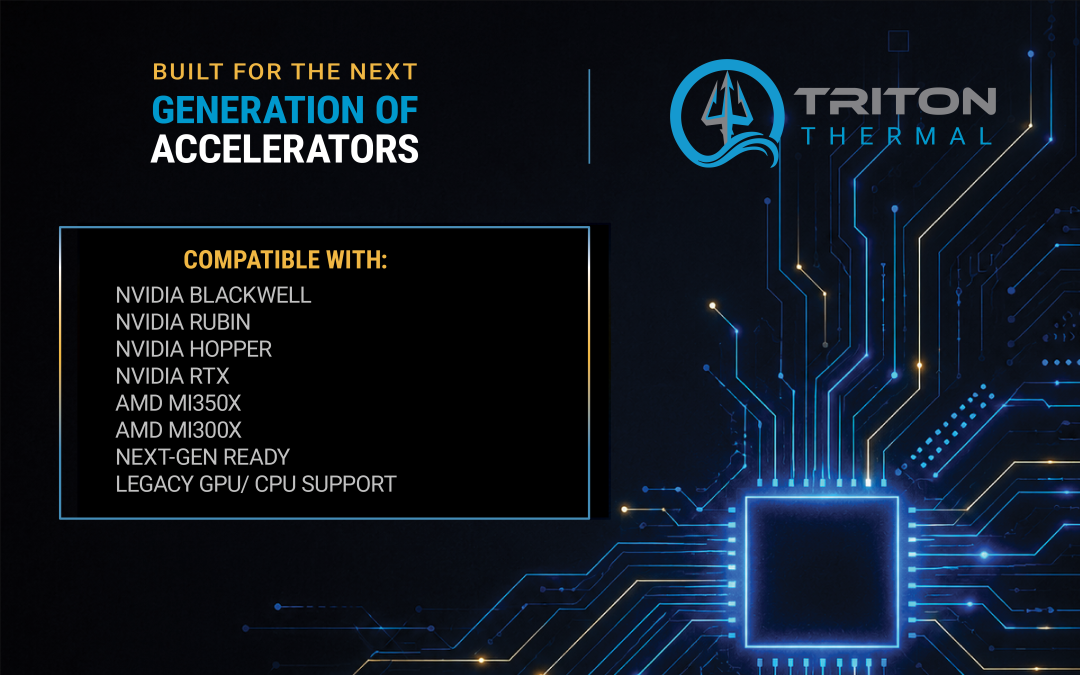
AI hardware is evolving quickly. The infrastructure supporting it needs to be ready. That sounds obvious until you look at the actual numbers: NVIDIA has shipped a new major GPU architecture roughly every 24 months—Ampere, Hopper, Blackwell, and now Rubin—with annual...
Every conversation about AI infrastructure eventually gets to power. Far fewer get to water—but water is becoming just as real a constraint, and in some regions, a bigger one. As AI deployments grow, so do concerns around water use, energy consumption, and cooling...
Modern AI accelerators generate heat loads that traditional air cooling was never designed to sustain. That’s not a design shortfall; it’s a physical limit. And it’s the last piece of the Atlas One story we haven’t unpacked yet: how the...
Most AI infrastructure conversations still measure success by equipment count: how many racks, how many GPUs, how many square feet of data hall. That’s the wrong scoreboard. AI infrastructure should be measured by what it produces, not by how much equipment it...
The AI race is increasingly measured in tokens, not square feet. Every organization racing to deploy more compute is running into the same three walls at once: not enough space, not enough power density, and not enough time to build the traditional way. Atlas One is...